
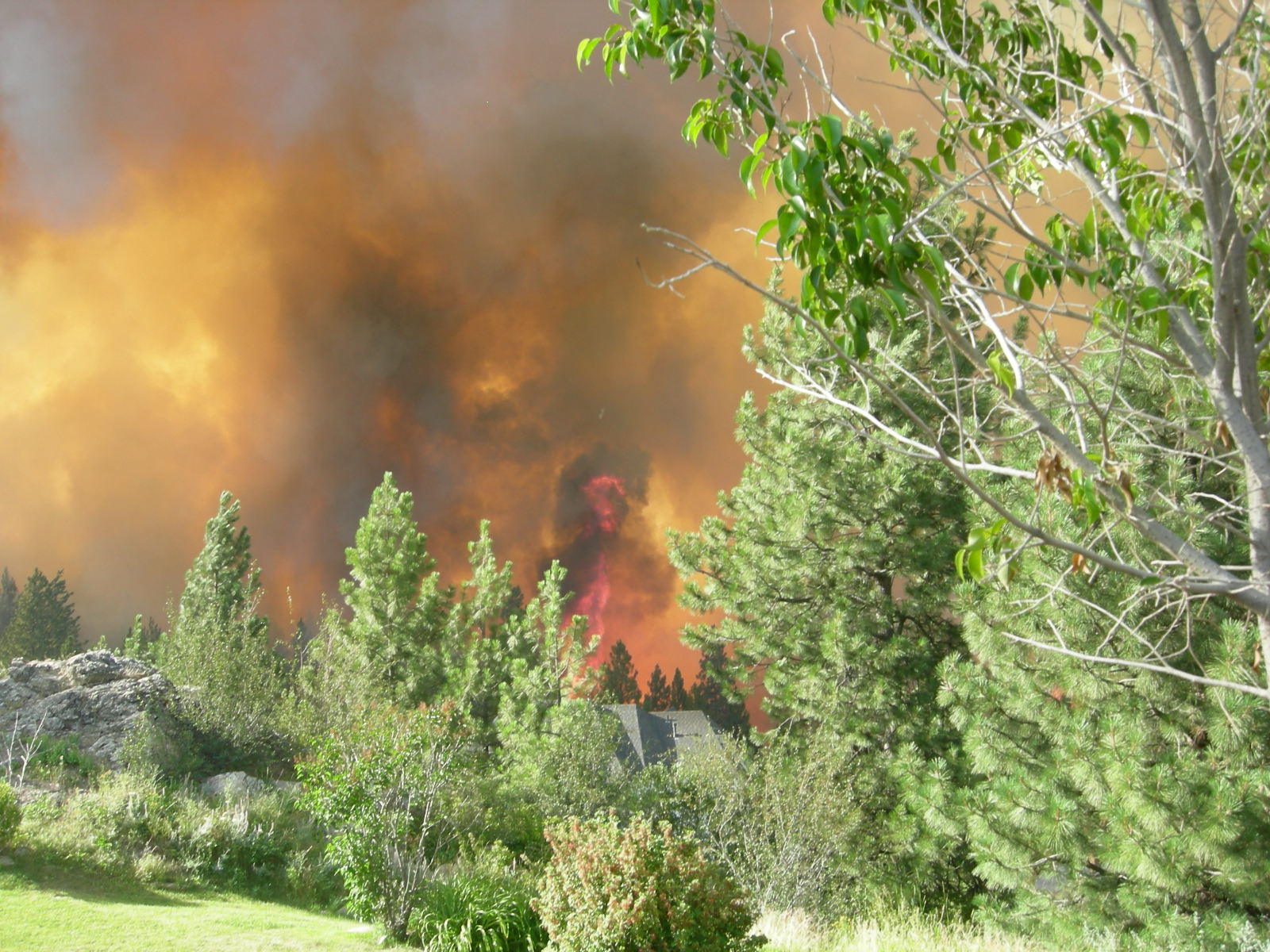
 On July 10, 2008, fire struck the Park Hills and Park
Meadows housing developments in the Dishman Hills on the south edge of the
Spokane Valley. Fortunately no injuries
or deaths occurred during the fire, but the effects of that fire on the
residents, their homes and properties will be felt for years to come. The fire burned over 1100 acres and destroyed
13 homes. At one point, over 450 firefighters were on the scene. Every year, from Alaska to Florida, thousands
of homes are destroyed by wildfire. What is happening right now in Colorado is
perfect example of the devastation created by wildfire. Homes are destroyed, lives
are shattered and landscapes are changed forever.
On July 10, 2008, fire struck the Park Hills and Park
Meadows housing developments in the Dishman Hills on the south edge of the
Spokane Valley. Fortunately no injuries
or deaths occurred during the fire, but the effects of that fire on the
residents, their homes and properties will be felt for years to come. The fire burned over 1100 acres and destroyed
13 homes. At one point, over 450 firefighters were on the scene. Every year, from Alaska to Florida, thousands
of homes are destroyed by wildfire. What is happening right now in Colorado is
perfect example of the devastation created by wildfire. Homes are destroyed, lives
are shattered and landscapes are changed forever.  As the wildland/urban interface continues to
expand, the risk of wildfire increases, becoming all too real for those who
live through the terrifying experience.
But there are steps that can be taken to reduce the risk of losing a
home to wildfire. Establishing defensible space around a home doesn’t have to
be difficult or expensive to be effective. Firewise is a very effective national program designed to assist landowners and communities prepare for wildfire and establish defensible space around homes, neighborhoods and entire communities.
As the wildland/urban interface continues to
expand, the risk of wildfire increases, becoming all too real for those who
live through the terrifying experience.
But there are steps that can be taken to reduce the risk of losing a
home to wildfire. Establishing defensible space around a home doesn’t have to
be difficult or expensive to be effective. Firewise is a very effective national program designed to assist landowners and communities prepare for wildfire and establish defensible space around homes, neighborhoods and entire communities.
The Firewise program defines ignition zones around the home. Starting right at the edge of the home out to 30' is called Zone 1 and should receive the most attention. Anything burning in Zone 1 increases the possibility of the home burning as well. Anything directly adjacent to the home such as a garage, decks and even fences are also possible points of ignition. The simplest treatments can also be the most effective. Inside of Zone 1 all plant materials should be green and not touching the building. Firewood should never be stacked next to the house or garage or under a deck. Lumber or other flammable materials like pine needles, leaves and other woody debris should be eliminated within this zone. The easiest way to think of how defensible this zone is; imagine the hottest day of the summer and someone is walking around the outside of your home lighting matches. Where are the possible points of ignition and is there anything that would burn and carry the fire to the building itself? Light, “flash fuels” like grasses and small
shrubs will burn quickly without generating a lot of heat. A fire burning in those fuels will probably
not cause a home to burn without igniting heavier fuels first. Larger fuels like trees and even logs on the
ground take much longer to get burning, but once ignited, will burn very hot,
super heating flammable materials in the path of the fire. Don't forget to look up. Are there trees close to the house with limbs
and branches overhanging the house or even touching it? And don't
forget the gutters. Are they clean or full of leaves and needles?
Air-borne embers from a fire not even on your property can easily ignite
a fire on a roof or gutters that are covered with flammable debris.
Treatments in the zones further from the house would include pruning limbs and tree branches up 6-10 above the ground so a ground fire cannot use those limbs as ladder fuels to get into the tops of the trees. Once a fire is in the forest canopy, only
good luck and lots of defensible space around a home will keep it from burning. Hazard fuels reduction is often a recommended treatment, thinning out heavily stocked stands of timber, in the Spokane area usually a spacing of 12' or more in Ponderosa pines.
 One of the many reasons people choose to live in rural wooded areas is because they like the trees. They like the quiet and solitude and the aesthetics of being surrounded by the forest. But that which they love can also be the cause of losing their home. As anyone who has ever been through the terrifying experience of a wildfire will tell you; it is not a matter of if the fire will come, it is a matter of when. Will you be ready? Do you have defensible space around your home? Can fire vehicles get in on your road? Is your address clearly marked?
 Having a Firewise risk assessment done and implementing the
recommendations is no guarantee that a home would not be lost or damaged in a
wildfire. The fuels, terrain, weather
and availability of fire suppression assistance are all factors that could work
against a homeowner. But the
Firewise program teaches us to plan for the worst case scenario; a hot day with winds driving a fire up the hill toward your home. Establishing adequate defensible space around
your home is the very best action you could take to reduce the risk of losing that home, even if you have to evacuate. Visit http://www.firewise.org/
to get more information. For a Free Firewise Risk Assessment, contact the
Spokane Conservation District at 535 7274 soon.
The best time to be Firewise is before the next fire starts…
Having a Firewise risk assessment done and implementing the
recommendations is no guarantee that a home would not be lost or damaged in a
wildfire. The fuels, terrain, weather
and availability of fire suppression assistance are all factors that could work
against a homeowner. But the
Firewise program teaches us to plan for the worst case scenario; a hot day with winds driving a fire up the hill toward your home. Establishing adequate defensible space around
your home is the very best action you could take to reduce the risk of losing that home, even if you have to evacuate. Visit http://www.firewise.org/
to get more information. For a Free Firewise Risk Assessment, contact the
Spokane Conservation District at 535 7274 soon.
The best time to be Firewise is before the next fire starts…


